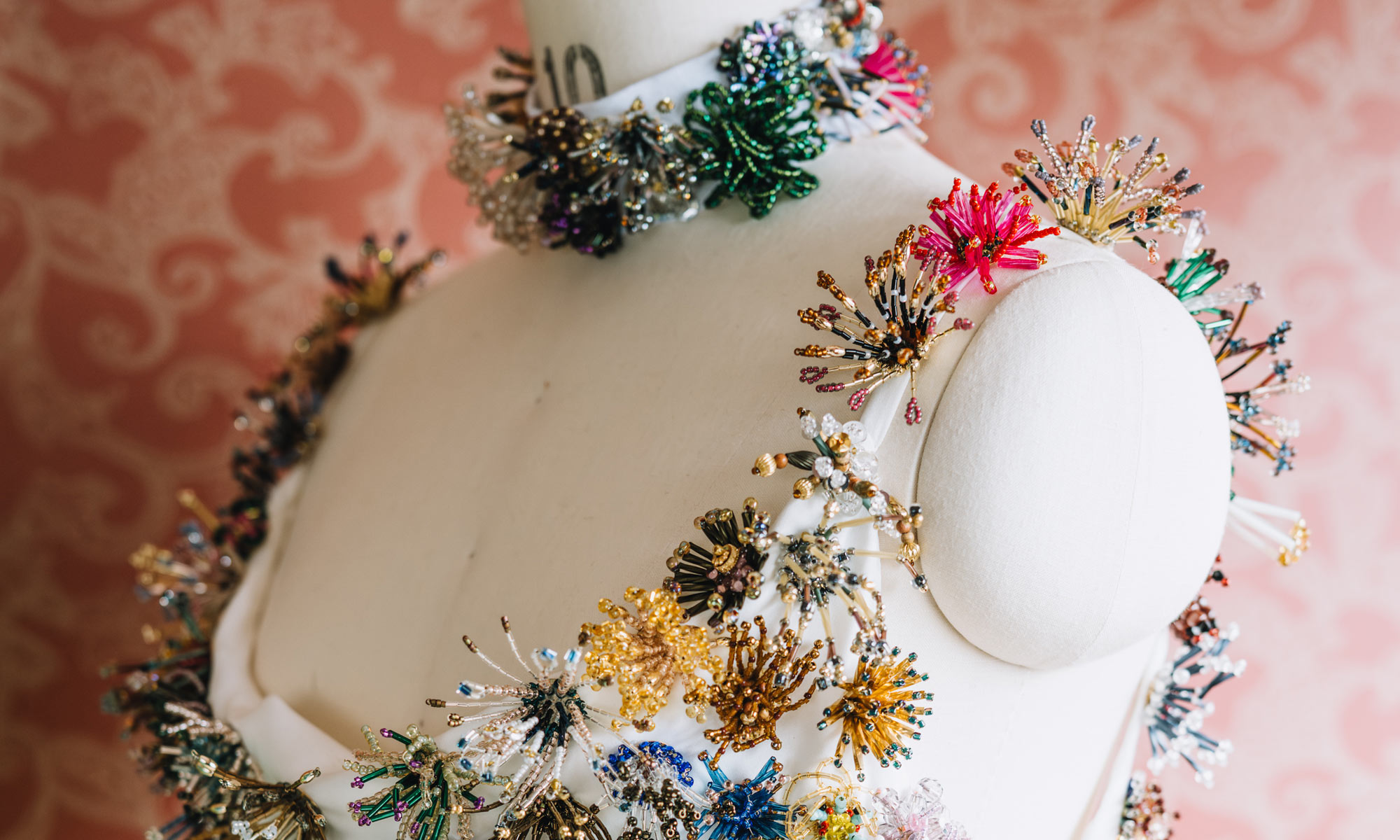
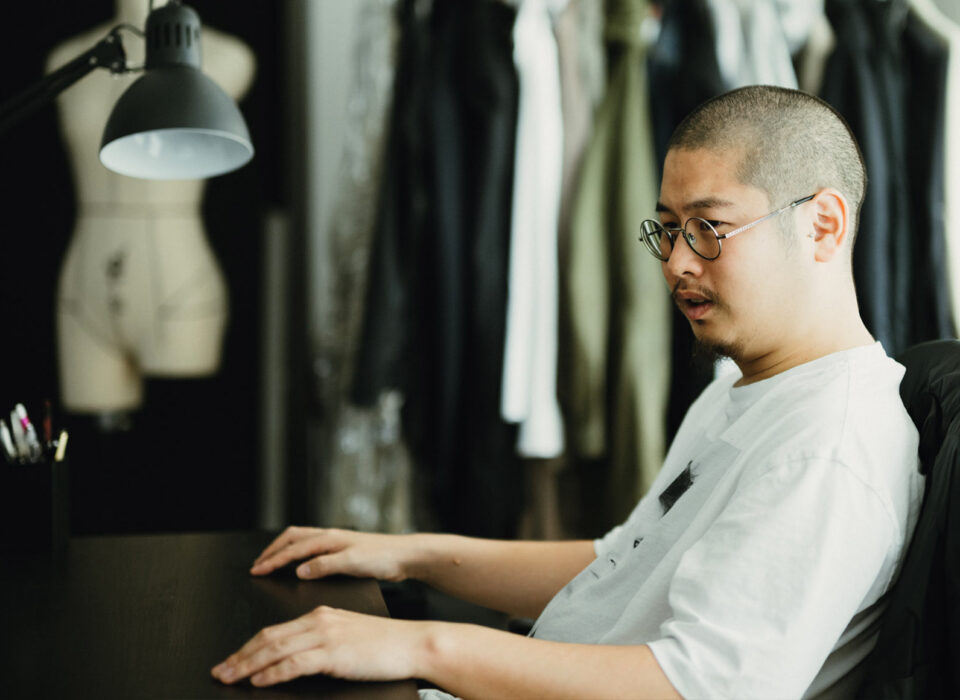
Photographer : KOJI YAMADA / MASASHI YOSHIKAWA (Runway photo)
What Makes FUMIE TANAKA's Shows so Mesmerising?FUMIE TANAKAのショーは、なぜ人を魅了するのか? こぼれ話
This online article completes the interview with Fumie Tanaka, which could not be fully printed in gap PRESS vol. 186. We delve deeper into what inspired designer Fumie Tanaka to become a designer and her thoughts on the creative process.
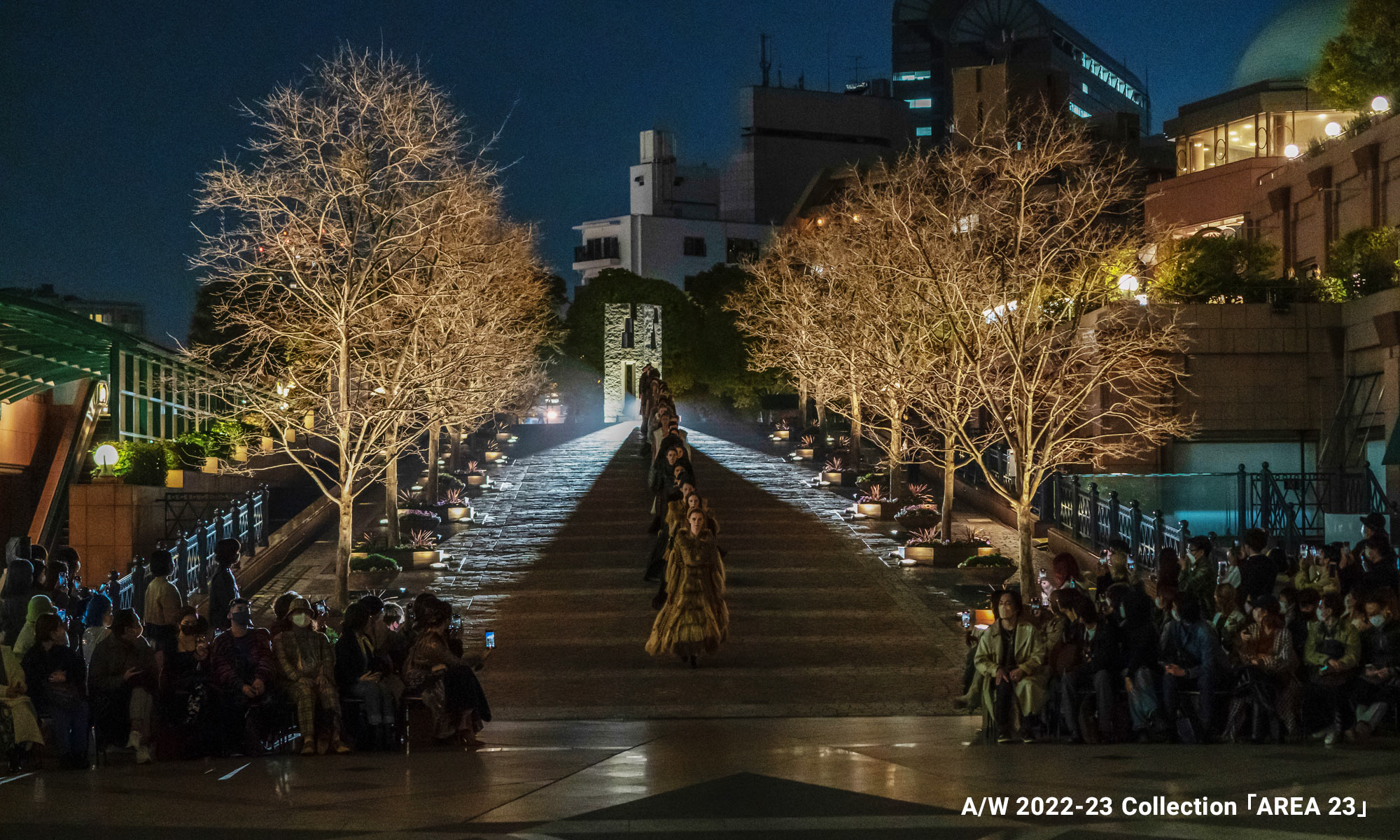
What kind of feedback did you receive after holding your show at Yebisu Garden Place?実際に恵比寿ガーデンプレイスでショーを行ってみて、どんな声が届きましたか?
Fashion shows tend to be seen as something only for a select few industry insiders, but I wanted to remove that barrier and make mine accessible to more people.
After the show, we received a lot of positive feedback, from a mother who said “My child became interested in fashion,” to people from other industries who said “I fell in love with fashion,” and that made me really happy. I dreamed of becoming a fashion designer since I was a child, but I never had the opportunity to experience a real runway show. I wonder if my dreams would have grown even more if I had seen an actual show back then.
What first sparked your interest in fashion?ファッションに興味を持ったきっかけは?
A long time ago, there used to be paper dress-up dolls that came as supplements inside magazines. When I was little, I really loved those, cutting out the thin paper dolls and playing with them, excitedly thinking to myself “These outfits are so cute!” I also used to draw lots of girls’ faces in my notebooks and play with them by putting on pretty makeup. I wasn’t particularly thinking about fashion back then, but I was very interested in “beauty.”
I first became clearly aware of fashion when I was in the third grade of elementary school. A friend’s mother was a good seamstress, and she always wore clothes made by her mother. I was so jealous of that. One day, when I went to her house to play, she said, “Fumi-chan, bring your favorite fabric and I’ll make something for you.” She made me a colorful short-sleeved shirt with a little floral collar. I was so happy. I think that was the beginning of my interest, when I realized that clothes can make people feel very happy! Soon after that experience, I felt the desire to make clothes and I got my mom to buy me a sewing machine.
Did you already have the desire to become a designer at that time?その頃にはもう、デザイナーになりたいという気持ちがあったんですか?
Yes, I did. I had the opportunity to shoot a message video to commemorate my elementary school graduation, and at that point I clearly declared, “My dream is to become a designer and have my own shop!”
So you dreamed of becoming a designer since you were a child and started making clothes. What was your life during your school days?子供の頃からデザイナーを夢みて、服づくりを始めていたんですね。どんな学生生活を送っていたんですか?
When I was in junior high school, I started going to second-hand clothing stores where fashionable people gathered and I made lots of friends who loved fashion. At the time, I used scraps of fabric and other things to make my own unique clothes, but I guess I stood out quite a bit in my hometown and my neighbors would look at me with a wary look on their faces!
Anyway, I was crazy about fashion at the time. I can’t remember which magazine it was, but there was a project where you could draw a design on a postcard for a prize and submit it, and a professional stylist would actually use it for styling. So I sent in my effort and I was actually contacted by the editorial department. I was completely absorbed in that kind of stuff during my junior high school days.
I understand that you studied art in high school.高校では美術を学ばれたそうですね
Yes, I learned the basics, including oil painting, Japanese painting, design and sculpture. I did well in the practical subjects, but I wasn’t very good at the academic subjects. I have loved drawing since I was a child, and I was very competitive, so I drew every day, wanting to be the best. I was recommended to go to an art college, but I had only ever considered fashion from the beginning, so I enrolled at Osaka Mode Gakuen, which I happened to find through an ad in a magazine.
Your artwork is reflected in many ways in the collection. Is that an influence from your childhood?コレクションにも文江さんのアートワークがさまざまに反映されていますが、幼少期からの影響があるのでしょうか?
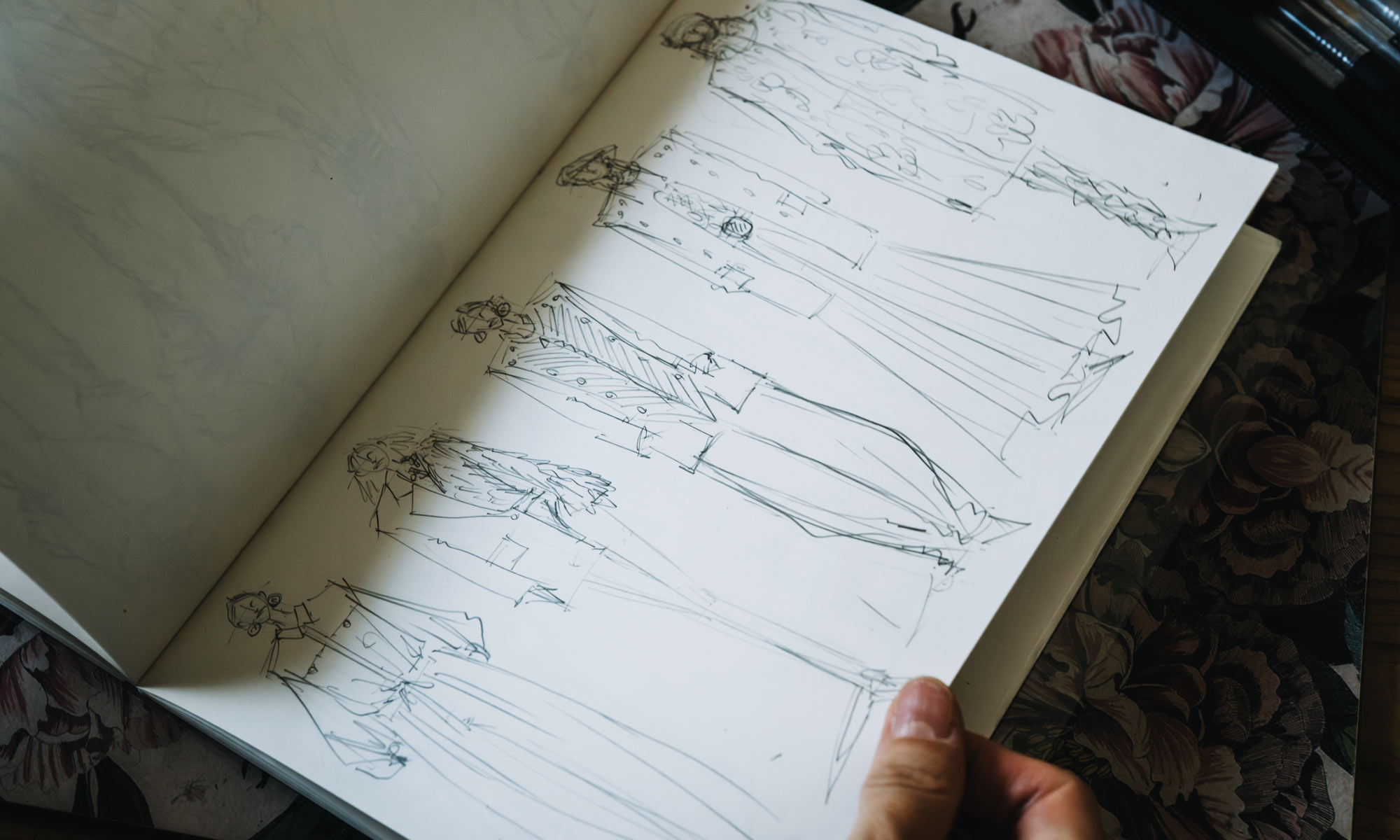
Yes. I’ve always loved drawing. Of course, I love looking at artwork, but more than anything, I love expressing myself with my own hands.
Are you still continuing your creative endeavors beyond fashion?現在もファッション以外の創作活動は続けているんですか?
Lately, I’ve been painting every night with my family. I spread sheets of newspaper on the floor, hand out small canvases to my children and husband, and say, “Okay, let’s paint!” We don’t decide on a theme, and each of us paints whatever we want.
However, perhaps because they know I can draw, they are oddly critical of my work. They say all sorts of things to me afterwards, but to me, the paintings my family draw look much better. I always end up overthinking things, and never being satisfied with my own work, I end up repainting one piece over and over again. As a result, I end up with a pile of unfinished paintings.
Why aren't you satisfied with your own drawings?ご自身の絵に納得できない理由とは?
I often get told, “These are beautiful drawings.” It’s true that I can draw beautifully. But sometimes I feel like maybe I can only “draw beautifully.” I find myself wondering, “So what does it mean to draw something that’s not ‘beautiful’?” and I find myself thinking about this a lot these days.
I think the reason children’s drawings look so beautiful is because they draw freely, without being bound by any constraints. I always try to make things neat and tidy. So now I feel like I’m reprogramming myself so that I can draw more freely, without being constrained by the concept of “beauty”.
It seems like you're intentionally breaking things down in your recent collections.最近のコレクションでも、あえて“崩す”ことを意識されているように感じます
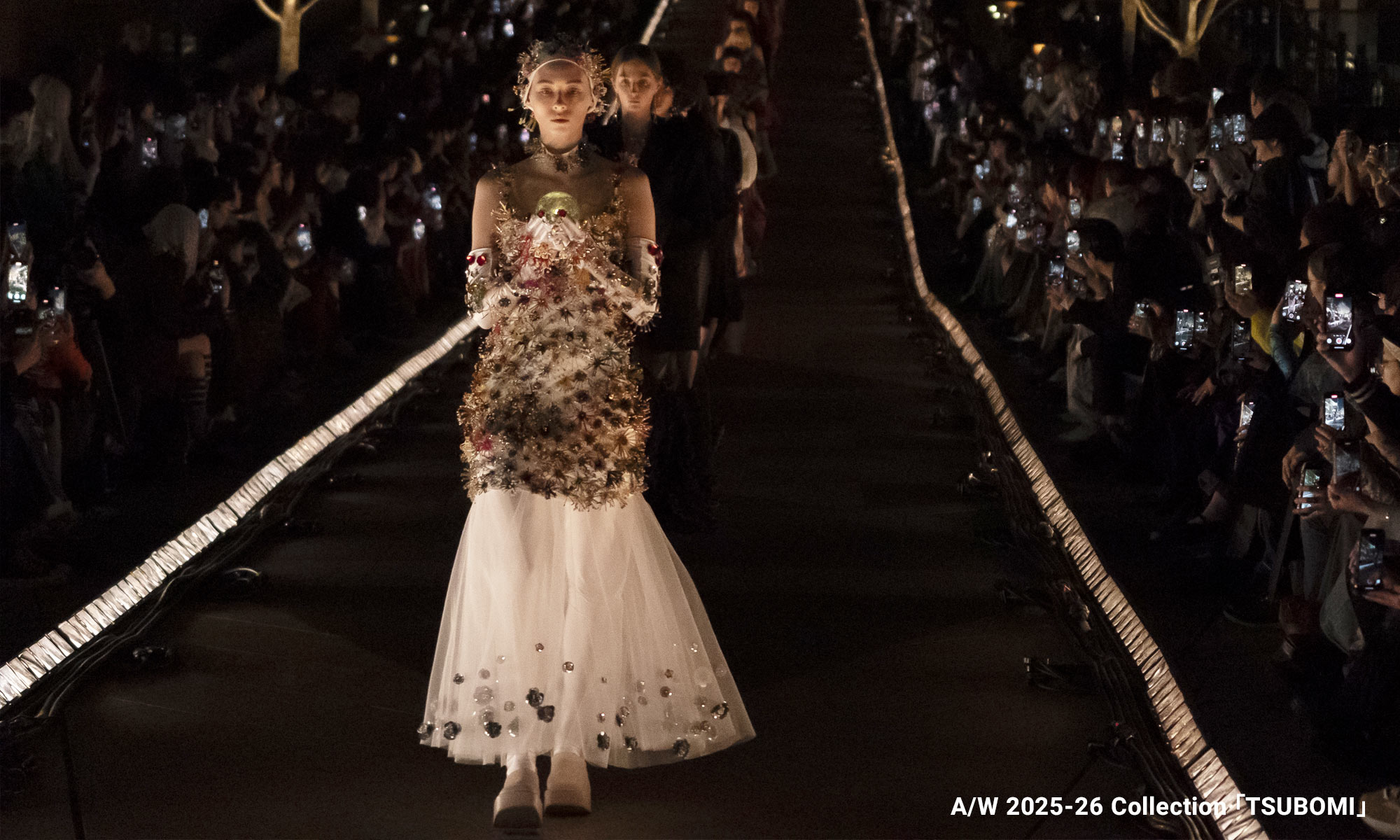
That’s right. I’m particularly conscious of the idea that “the moment of destruction is beautiful” and “there is beauty in something that’s slightly off.” Up until now, I couldn’t fully accept such things as “transience” or “misalignment”, but recently I’ve begun to fully appreciate the beauty that lies therein.
I’ve also been practicing calligraphy recently. I’ve been changing my handwriting and the quality of my writing, deliberately breaking down my letters and trying out different line styles. I feel like I can’t create truly beautiful embroidery or forms unless I can express emotional fluctuations and sudden discomforts through lines.
For me, both drawing and doing calligraphy are connected to making clothes. They’re all like “muscle training” that sharpens my senses. I think the sensations I gain in this way are gradually being reflected in my collections.
Please tell us if there is anything you personally would like to tackle in the future.今後文江さん個人として、取り組んでみたいことなどあれば教えてください
Recently, I’ve been wanting to paint more. I’d like to try my hand at an art exhibition someday. There are so many emotionally charged events happening every day that I can no longer contain my feelings within the confines of fashion. In the future, I would like to express my feelings freely through different media.
The joy Fumie felt as a child remains intact to this day, shaping her approach to fashion design and shining through in every detail of her creations. As I listened to her story, I suddenly remembered writing in an elementary school essay about wanting to become an “animal doctor”. Even if the content of our dreams is different, I’m sure we all have that feeling of being “engrossed in what we love.”
She still cherishes the ideas of “caring for others” she developed through fashion and continues to share her passion for creating clothes with those around her. This energy circulates as positive vibes, gently warming our hearts.
The title of this interview is, “Why are FUMIE TANAKA’s Shows so Captivating” ? I am once again convinced that the answer to this question can be summed up with: “The circulation of emotions.”